Web & applications
Website design & development
I connect website strategy, content, user experience, design and development. We define what the site needs to do for the business before choosing page structures, features and integrations.
Enquire about this service ↗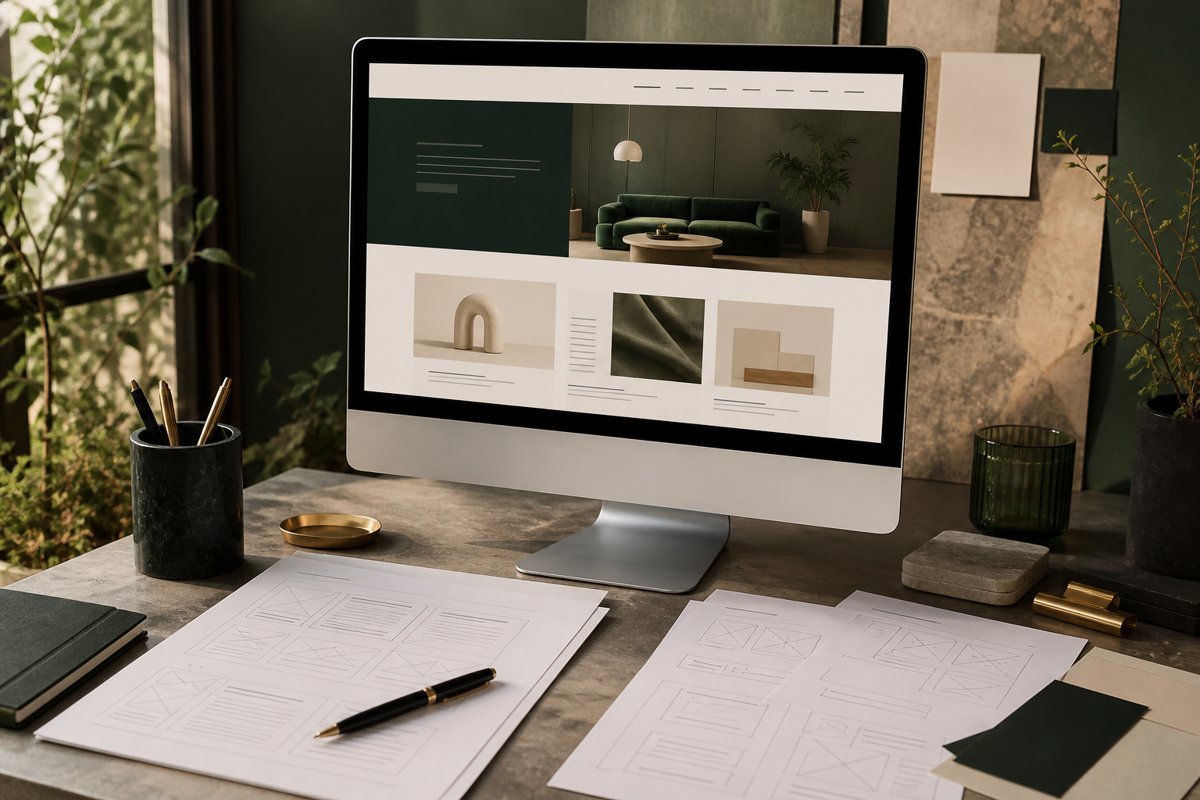
HOW I CAN HELP
Build a website around the visitor’s next step.
Design and development scope
Launch and integration priorities

THE APPROACH
From the brief to a clear direction.
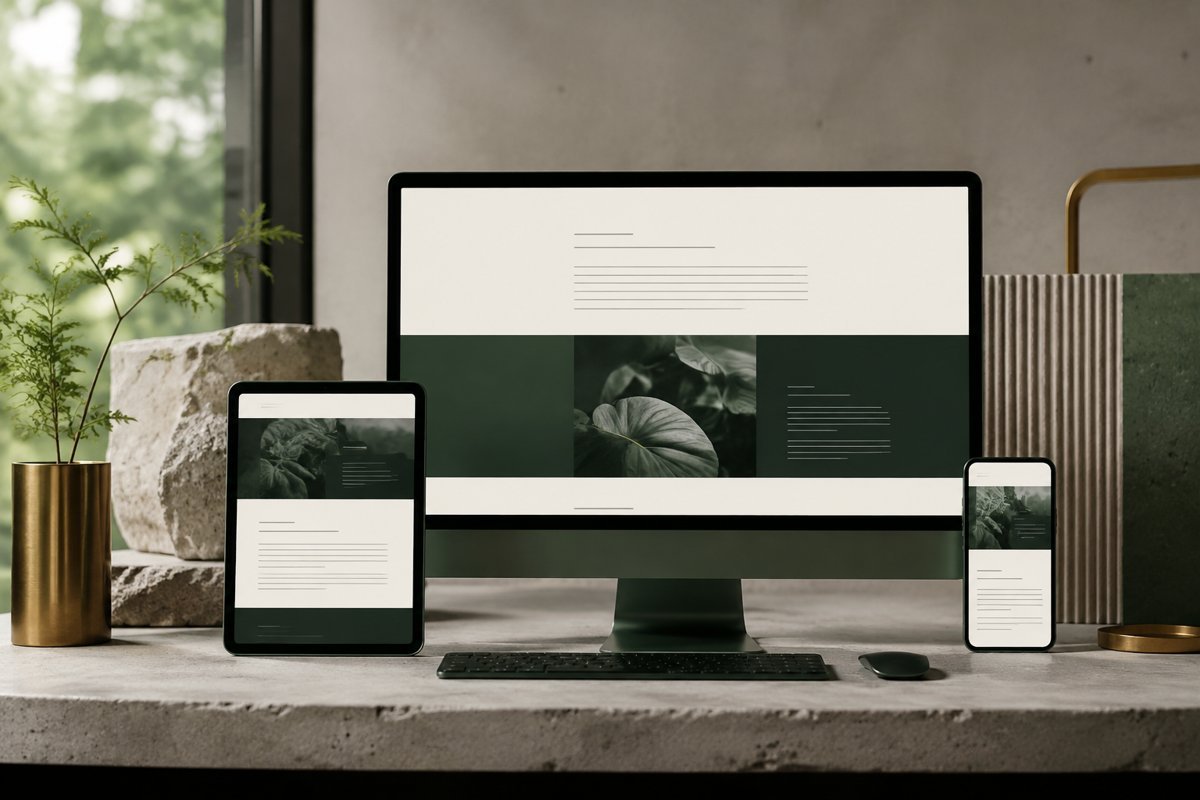
Yes. I design and develop responsive websites, with layouts and navigation reviewed across phone, tablet and desktop sizes.
The existing site, page requirements, integrations and content readiness.
THE APPLICATION
Built around the way you work.
Yes. I can review the current content, journeys and technical setup, then plan the redesign and migration around the pages and functionality you need.
Discuss your briefA website project goes wrong when it starts with the design and ends with the question of what the site was meant to do. This page explains how I plan and build a site around the visitor and the business goal, what the stages are, what depends on you, and how I think about launch and handover.
Define the job of the site before choosing pages
I begin with the business goal, not the sitemap. A site might exist to generate qualified enquiries, sell products, support existing customers, recruit staff or establish credibility before a sales call. Often it does several of these, and the priority order decides what gets prominence. A site that tries to serve every audience equally usually serves none well.
From there I work out who visits, what they want to know and what would make them take the next step. I review what you already have: analytics if available, search queries, sales questions that come up repeatedly. This gives a plan of the main journeys, such as from a search result to a service page to an enquiry, and the pages and content each journey needs.
How the project is staged
The usual sequence is discovery, structure, content, design, build, testing and launch. In the structure stage I produce a sitemap and simple wireframes so we can agree how pages are organised and what each one must contain, before anyone argues about colours. Content is worked on alongside, because design that is created with placeholder text tends to break when real copy arrives.
Design comes next, starting with key templates rather than every page: the home page, a service or product page, a content page and a contact route. When those are approved, the build covers responsive behaviour, performance, forms, integrations and the content management setup. Testing across devices and browsers comes before launch, followed by redirects, tracking setup and a checklist for go-live.
- Discovery: goals, audiences, current site review and technical constraints.
- Structure: sitemap, user journeys and wireframes for key pages.
- Content: page copy, imagery and calls to action, planned alongside design.
- Design and build: templates, responsive layouts, forms and integrations.
- Launch: testing, redirects, analytics and handover.
Content is usually the real bottleneck
Most delayed websites are waiting for words and images, not code. Writing clear page copy takes time and decisions, and it is often left until the end. I plan content early and agree who writes what, with dates. Where the existing copy is thin, I can help shape the structure and messages, while the facts about your business must come from you.
Photography matters too. Generic stock imagery weakens credibility, particularly for service businesses where trust is the product. Real photos of your team, work or products, even if simply shot, tend to serve better. If you need a rebrand, a message review or visual material, those link to Brand strategy and positioning, Logo and visual identity and Video production, and it is more efficient to settle them before the build than during it.
A practical rule I follow is that no page enters the build without a draft of its main content and a clear call to action. It sounds strict, yet it prevents the common pattern of a site that is technically finished and a launch that slips for weeks while text and photographs are gathered.
Technical decisions that deserve attention
Platform choice should follow your needs for editing, integrations and growth. A hosted builder may suit a small brochure site, a CMS-driven build suits regular publishing, and a custom build suits unusual functionality. I explain the trade-offs in your terms: who can edit the site, what it costs to maintain, how much freedom you have if you later want to move.
Performance and accessibility are built in, not added at the end. That means sensible image handling, limited scripts, readable contrast, keyboard-friendly navigation and clear headings. Search visibility depends on structure too: meaningful page titles, headings, internal links and clean URLs. If search is a key channel, I coordinate with the SEO work so the structure supports the keywords you want to be found for, and redirects protect existing rankings during a redesign.
Ownership is part of the technical decision. Your domain, hosting and accounts should be registered in your company's name, with credentials held by you. I work as a collaborator with delegated access, so that if our engagement ends, you retain full control of the site and everything on it.
Redesigns need migration planning
If you already have a site, the existing pages carry history. Some attract search traffic, some have links from other sites, some are rarely used. Before a redesign I audit which pages matter, map old addresses to new ones and set up permanent redirects. Skipping this step is the usual reason a new site loses visibility after launch.
I also keep what works. A redesign is a chance to remove content that no longer serves anyone, but not to discard useful pages simply because they are old. Tracking is checked before and after, so you can see whether key actions such as form submissions continue to register. Expect some fluctuation after a major change while search engines reprocess the site; the extent depends on the site and the quality of the migration.
Mistakes I would help you avoid
Treating the home page as the whole site. Most visitors arrive on inner pages from search or ads, so those pages need clear headlines and a next step. Overloading navigation with every service and sub-page. Burying contact details. Using sliders and heavy animation that slow the page. Launching without testing forms, so enquiries silently fail. Ignoring mobile, where the majority of visits often occur.
Another is choosing a design because it impresses colleagues instead of because it helps the visitor. Ask what a first-time visitor needs to see in five seconds, and whether they can find your contact route without searching. Finally, nobody being responsible after launch. Sites need updates, security patches and fresh content; decide who owns that before the project closes.
- Test every form and confirmation email on real devices before launch.
- Set up conversion tracking for the actions that matter.
- Agree who updates content and who maintains hosting and security.
- Keep a record of logins, domain and hosting details in your company's name.
What I need from you, and how success is judged
I need the current site and its analytics access, your goals, the audiences, the integrations you rely on, such as CRM, booking or payment tools, and the state of your content. A single decision-maker and a realistic view of timing help enormously. Scope and timeline are agreed after I have reviewed these, and they depend on complexity, review rounds and how quickly content and approvals arrive.
Success is judged against the goal set at the start: enquiries received and their quality, tasks completed, pages visited before contact, speed and usability on mobile. I do not promise rankings or leads. Related work includes E-commerce experiences for stores, Mobile applications where an app complements the site, and Marketing creatives for campaign pages.
A website is finished when it does its job for the visitor, not when the design is approved.
When this is not the right move
If your current site is fine structurally but underperforms because traffic is thin or the offer is unclear, a rebuild will not help. A focused set of improvements, or work on positioning and visibility, may give more for less. A full redesign is justified when structure, platform or content approach is the obstacle.
If the business is likely to change significantly soon, a modest site on a flexible platform is often enough. You can grow it as the facts settle, rather than building something large that you will need to rewrite.
WAYS TO WORK TOGETHER
A focused project. Or ongoing support.
Start with a strategy session. We can then agree a project brief, a focused consultation or an ongoing engagement around your priorities.
YOUR QUESTIONS, ANSWERED
Website design & development FAQs
Scope, preparation and what happens next.
Will my website work on mobile and desktop?
Yes. I design and develop responsive websites, with layouts and navigation reviewed across phone, tablet and desktop sizes.
Can you redesign an existing website?
Yes. I can review the current content, journeys and technical setup, then plan the redesign and migration around the pages and functionality you need.
What should I prepare for our first conversation?
The existing site, page requirements, integrations and content readiness.
How are the scope and timeline agreed?
I review your requirements, starting material and target date before proposing milestones. For website design & development, the schedule depends on complexity, review rounds and the access or assets needed.
How much does this service cost?
Start with a strategy session at ₹2,999 + GST. A digital audit starts from ₹19,999 + GST, and ongoing monthly options start at ₹50,000 + GST for SEO consulting or ₹75,000 + GST for a consulting retainer. Project delivery is scoped and quoted separately; we can choose the right arrangement for your brief.