Brand & creative
AI video production
I can help develop AI-assisted video concepts and visual sequences around your brand story. The workflow can combine generated material with editing, sound and supplied footage, with review checkpoints before final delivery.
Enquire about this service ↗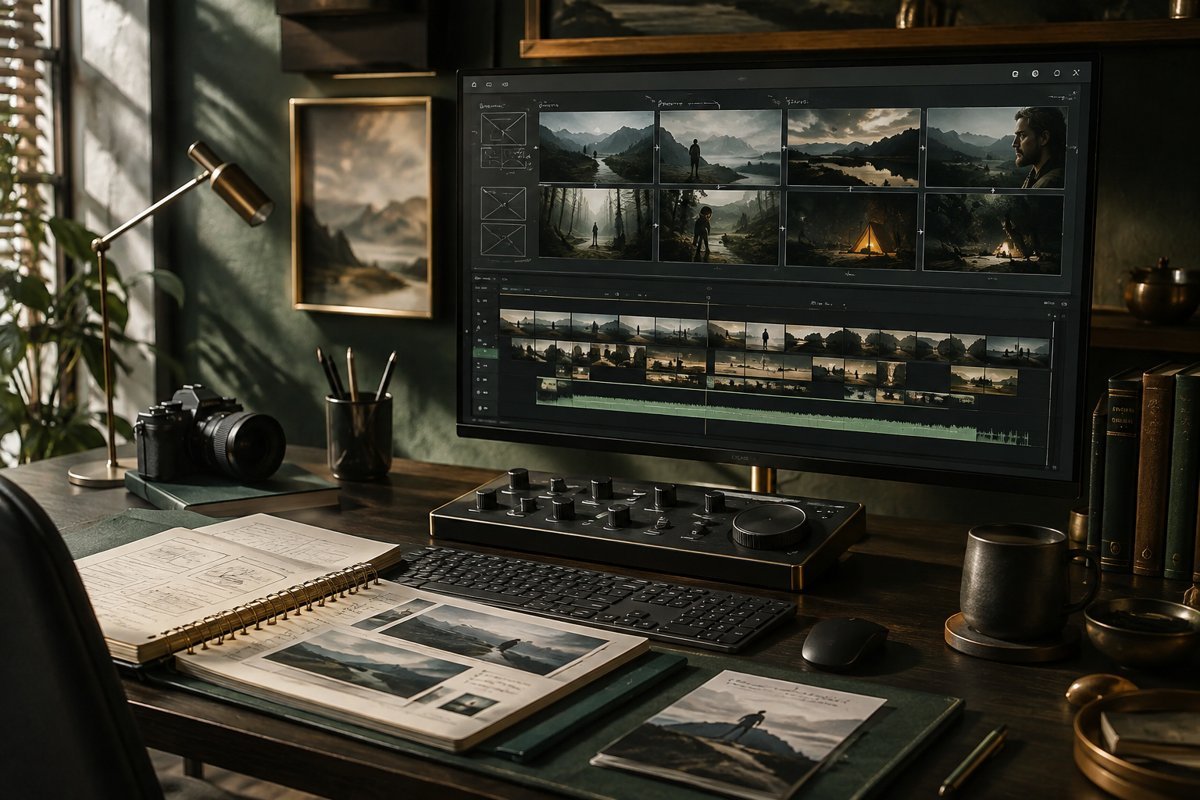
HOW I CAN HELP
Use AI with a clear creative purpose.
AI-assisted visual production
Editing and format adaptations
THE APPROACH
From the brief to a clear direction.
Yes. I can combine suitable generated sequences with supplied footage, editing, captions and sound, with the creative direction agreed before production.
Your message, brand references, intended use and any supplied footage or assets.
THE APPLICATION
Built around the way you work.
We begin with a brief, visual references and storyboard, then review the generated material before the final edit. Any supplied people, products and brand assets need appropriate permissions.
Discuss your briefAI can speed up parts of video production and make certain visuals affordable that were not before. It can also produce results that look generic, drift off-brand or create rights problems. I use it as one tool in a production process with a brief, a storyboard, review points and a human edit, not as a button that makes a finished film.
Decide whether AI is the right method
Some videos suit AI-assisted production: concept visuals, stylised sequences, product storytelling that would be costly to film, social formats that need volume and variation. Others do not: anything that depends on real people, real places or real product behaviour that viewers will expect to be true.
I start by asking what the video is for, where it will run and what the viewer should believe afterwards. If the answer involves showing the product honestly, I will push to use real footage or photography for those parts and use AI around them.
Where AI is not the right fit, I will say so and suggest a conventional shoot or a mix.
Brief and concept first
Every production begins with a written brief: audience, message, tone, length, platforms, call to action and any mandatory elements. I ask for brand references, existing videos you like and dislike, and anything that must not appear.
From the brief I develop one to three concepts, each with a short outline. You choose a direction before any generation work begins. This keeps cost and time under control, because generating visuals without a clear concept leads to many pretty clips that do not fit together.
The brief also records usage: social, website, ads, events. Intended use affects format, resolution and rights.
I also ask who will see the video and what they already believe about your brand. A first-time viewer and an existing customer need different things. Writing this down early stops the concept drifting toward what the team finds clever and keeps it pointed at what the audience needs to see.
Storyboard and visual references
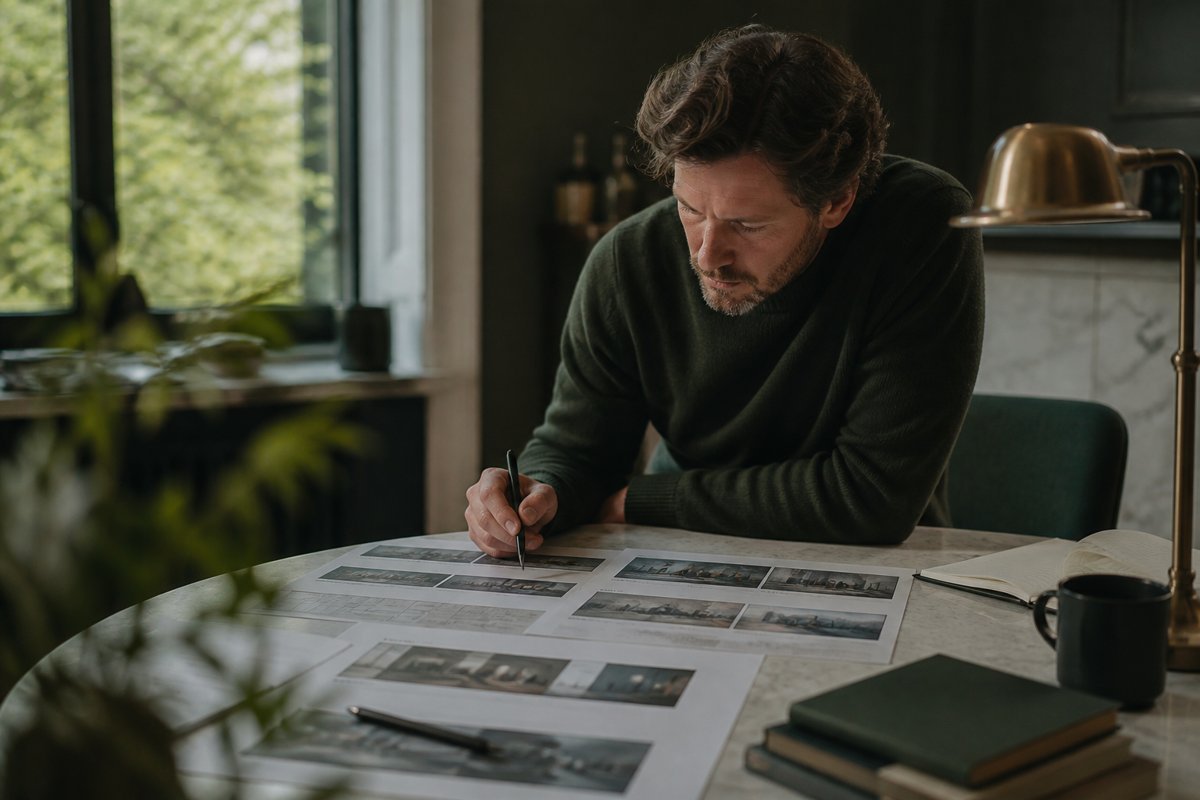
Next comes a storyboard: a sequence of frames showing what happens, what is said or shown on screen, and how long each part lasts. For AI work I add visual references for style, colour and lighting, so the generated material has something concrete to match.
The storyboard is where most problems are cheaper to fix. Changing a frame costs a few minutes; changing a rendered sequence costs hours. I ask you to approve it formally before production, and to raise concerns early.
For brand-sensitive work, I prepare a style sheet listing colours, typography, logo treatment and visual do's and don'ts.
- Concept outline and storyboard for approval.
- Style references and, where useful, a short test clip of the look.
- Voice-over or script, with the wording confirmed before recording.
- Music and sound direction with licensing noted.
- Format plan for each platform, such as vertical, square and widescreen.
Production: generated, supplied and edited material
Production combines several sources. Generated sequences come from AI video and image tools, chosen for the look needed. Supplied footage and product shots come from you. Graphics, captions, sound and music come from standard editing tools.
Generated material needs many attempts and careful selection. Models can produce odd motion, distorted details, unreadable text or inconsistent characters between shots. I discard what does not hold up and fix what can be fixed in editing. Where a detail has to be exactly right, such as a logo or a product label, I add it in post-production rather than rely on generation.
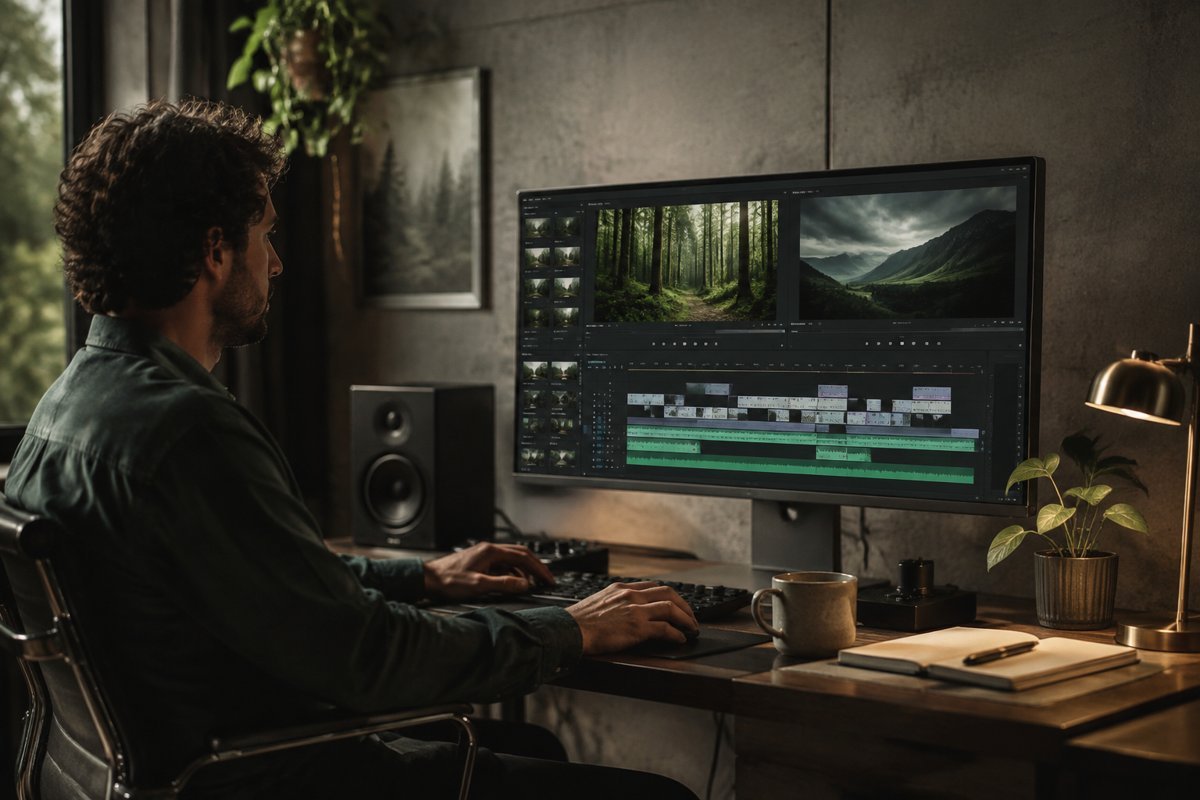
The edit is where it becomes a film. Pacing, cuts, sound design and captions do more than any single clip.
Sound is often neglected. Voice, music and effects carry a great deal of the perceived quality of a video, and poor audio makes even good visuals feel cheap. I plan sound at the storyboard stage and treat it as a core element, not a last-minute addition, using licensed music and recorded or properly licensed voice-over.
Rights, permissions and disclosure
There are real questions here. Generated content depends on the terms of the tools used, and those terms vary. I check the licence for commercial use of each tool and keep a record. Any real person, voice, product or brand asset I use must be supplied with permission, and I do not generate a likeness of a real individual without their consent.
Disclosure rules vary by platform and by country, and some ad platforms ask for labels on synthetic media. I flag these requirements and leave final legal decisions to you and your adviser.
If your industry is regulated, such as health or finance, additional approval may be needed before publication.
Review rounds and delivery
I share a rough cut, then a refined cut, then the final. At each stage you give consolidated feedback in one list, which avoids conflicting notes. The number of rounds is set in the scope, and extra rounds are quoted if needed.
Final delivery includes the master file, platform-specific versions, captions or subtitle files, and, where agreed, project files. Timeline depends on length, complexity, the number of formats, how many generation attempts are needed and how quickly feedback comes back.
I also recommend testing the final video on the devices and platforms where it will be seen. Colours, text size and pacing can look different on a phone in a bright room than on a studio monitor. A short check before release catches problems that nobody noticed during review, and costs very little.
Common mistakes
Starting with the tool rather than the message. Expecting one generation to be usable. Mixing visual styles from different models so the film looks stitched together. Forgetting captions, since many viewers watch with sound off. Publishing without checking that nothing in the frame misleads the viewer about the product.
- No approved storyboard before generation begins.
- Too many styles in one video.
- Text and logos generated instead of added in editing.
- No rights check on tools, music or supplied assets.
- One long cut with no versions for each platform.
Formats and platform versions
A video made for one platform rarely suits another unchanged. Vertical short-form needs a strong first second and captions. A website hero loop needs to be light on file size and calm to watch. A longer explainer needs structure and pacing.
I plan the master edit and the adaptations together, so the shoot or generation covers what the versions need. That usually means framing for multiple aspect ratios, creating cut-downs of different lengths and exporting with appropriate captions. Planning this at the start is far cheaper than rebuilding a finished video later.
A clear message, brand references, intended use and any footage, logos, product images or voice material you want included. Please also confirm who can approve the work and how quickly, as delayed feedback is the most common cause of schedule slips.
If you want a specific look, send examples of videos you like. If you have concerns about AI use in your industry or among your customers, tell me early. Some audiences react badly to synthetic visuals, and that should shape the decision about where and how to use them.
When this is not the right move
If you need documentary-style honesty, such as customer testimonials, a factory tour or a service demonstration, film it. If your brand identity is not settled, video will magnify the confusion; the visual direction should be worked out first, perhaps with social media marketing or content and copywriting support.
And if you need the cheapest possible output with no review, I am probably not the right fit.
Use AI where it helps the story, and real footage where truth matters.
WAYS TO WORK TOGETHER
A focused project. Or ongoing support.
Start with a strategy session. We can then agree a project brief, a focused consultation or an ongoing engagement around your priorities.
YOUR QUESTIONS, ANSWERED
AI video production FAQs
Scope, preparation and what happens next.
Can AI video be combined with existing footage?
Yes. I can combine suitable generated sequences with supplied footage, editing, captions and sound, with the creative direction agreed before production.
How do you keep the output aligned with my brand?
We begin with a brief, visual references and storyboard, then review the generated material before the final edit. Any supplied people, products and brand assets need appropriate permissions.
What should I prepare for our first conversation?
Your message, brand references, intended use and any supplied footage or assets.
How are the scope and timeline agreed?
I review your requirements, starting material and target date before proposing milestones. For ai video production, the schedule depends on complexity, review rounds and the access or assets needed.
How much does this service cost?
Start with a strategy session at ₹2,999 + GST. A digital audit starts from ₹19,999 + GST, and ongoing monthly options start at ₹50,000 + GST for SEO consulting or ₹75,000 + GST for a consulting retainer. Project delivery is scoped and quoted separately; we can choose the right arrangement for your brief.